Pinocchio–the Blue Fairy: Motherlike Guardianship
Pinocchio (Tania Zamorsky Edition)The relationship between Pinocchio and the Blue Fairy is a continuing form of maternal guardianship: she watches over him through danger and misconduct, while he gradually learns to answer her care with care of his own. Its decisive change comes when Pinocchio stops spending his scant money on himself and gives it to support her. By the end, their bond joins rescue and forgiveness to a reciprocal act of filial responsibility.
A Promise and a Repeated Failure
The Fairy’s care is present even before Pinocchio becomes capable of returning it. After he has spent much of his life as a wooden puppet, she promises that the next day he will become a well-behaved boy. The occasion is prepared as a celebration: his school friends are to be invited to her house, where two hundred cups of coffee with milk and four hundred buttered rolls have been ordered. The abundance gives the promised change a public, joyful shape, and shows the Fairy preparing to welcome him into a new life.
That future is immediately deferred. Instead of becoming a boy, Pinocchio secretly leaves with Lucignolo for Toyland. The contrast matters to their relationship: the Fairy offers a place in a household and a hoped-for transformation, while Pinocchio again chooses escape. Her guardianship is not depicted as a simple reward for obedience, because it continues after he has frustrated this particular promise. The gap between the celebration prepared for him and the departure he chooses makes his later return to responsibility more consequential.
Protection Beyond His Misconduct
The Fairy’s care becomes clearest when Pinocchio recounts how he escaped death after being sold as a donkey. His buyer had intended to kill him, but instead tied a stone around his neck and threw him into the sea. According to Pinocchio’s account, the Fairy saw him in danger of drowning and sent a multitude of fish around him. They ate away the donkey’s hide, beginning with his ears, face, neck, mane, and the skin and coat on his body. When they reached the wood beneath, they could not eat it; the fish dispersed, leaving the living wooden puppet rather than a dead donkey.
The rescue is both physical and revelatory. Pinocchio’s animal covering is stripped away by the very creatures summoned to save him, and the buyer who hauls up the line finds a puppet instead of the carcass he expects. Pinocchio credits the Fairy with intervening despite his escapades and bad conduct. Her protection does not erase the dangers he has entered, but it prevents those dangers from becoming final.
The same pattern of care is conveyed indirectly through the Talking Cricket. The Cricket explains that a graceful blue goat gave him his little hut. When Pinocchio asks where the goat went, he learns that she left grieving and believed the Great Shark had already devoured him. Pinocchio recognizes her as the Fairy and breaks into sobs. The news reveals the cost of her guardianship as well as its persistence: even when she cannot be beside him, she fears for him and has arranged shelter for someone who can help care for him.
From Dependent Child to Caregiver
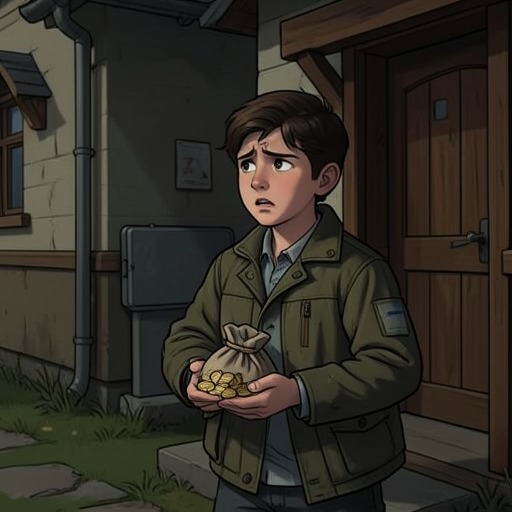
The relationship changes direction when the Talking Cricket tells Pinocchio that the Fairy is gravely ill and has no money to buy even a piece of bread. Pinocchio is distressed and wishes he could bring her a fortune, but he has only forty soldi. He had been about to spend them on new clothes; instead, he gives all of them to the Snail to carry to the Fairy. He then promises to work five additional hours a day so that he can support her as well as Geppetto.
The choice is concrete rather than ceremonial. Pinocchio relinquishes the clothes he wanted and offers the small sum he actually possesses; he even says he would sell the rags he is wearing if that were needed to help her. His response reverses the earlier pattern in which the Fairy protects him from consequences he has brought upon himself. Now he accepts additional labor for her sake, extending the work he already does to maintain his father. Her need draws from him not another promise of future goodness but an immediate gift and a plan to keep giving.
The Fairy’s earlier fear and Pinocchio’s later concern answer one another. She had left the blue goat’s shelter grieving because she believed the Great Shark had swallowed him; once he hears that she is in want, he treats her welfare as his own responsibility. The maternal bond is therefore shown not only through her unceasing care, but through Pinocchio’s growing capacity to recognize and reciprocate it.
Forgiveness and Transformation
That night Pinocchio works until midnight and makes sixteen rush baskets instead of the eight he usually makes. In a dream, the Fairy appears beautiful and smiling, kisses him, and forgives his past mischief because of his good heart. Her message does not declare that he has always been obedient or well behaved. Instead, it distinguishes his shortcomings from the loving assistance he has given his parents in poverty and illness, while urging him to use better judgment in the future.
When he wakes, Pinocchio is no longer a wooden puppet but a boy. He finds himself in a furnished, simply elegant room, with new clothes, a cap, and leather boots. The Fairy’s acknowledgment of his sacrifice accompanies this transformation, although the account presents the change through his awakening rather than describing a separate act of transformation by her. The returned forty soldi have also changed in value: a small ivory purse bears the Fairy’s thanks, and inside are forty new gold coins in place of the copper money he gave away.
The final reward is thus both material and personal. Pinocchio receives back more than he surrendered, but the story places the gift beside his changed appearance and the Fairy’s forgiveness, not in place of his labor or concern. Her maternal guardianship has endured his failures; his own change becomes visible when he acts for her without first securing a reward. Their relationship closes on that reciprocity: the Fairy’s long care helps make possible the boy who can finally care for her.